AFRIKAN YOGA HEALING PROGRAMME.
Feb 9, 2026
Venue: Uhuru Park, Nairobi
Date: 29 October 2025
Facilitators: Noosim Naimasiah & Marley
Guest Teacher: Pablo Imani (Afrikan Yoga Teacher)
“Afrikan Yoga frees the spirit by working through the body first. So, ‘A Free Ka’ (spirit) is the definition I use intermittently with Afrika. Don’t look at this word merely as a continent or place, but see it as a state of mind and spirit.”
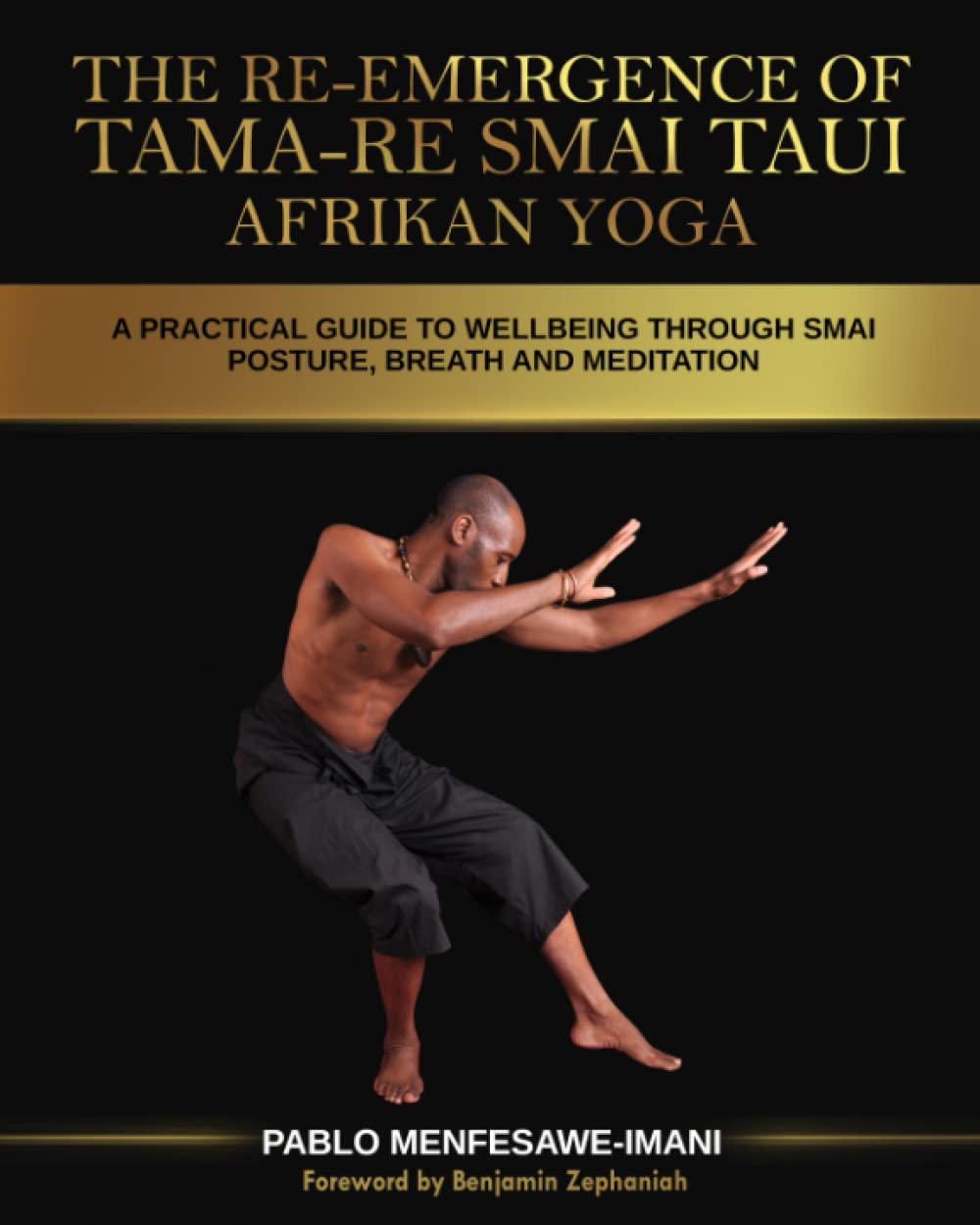
Pablo Imani’s Afrikan Yoga: A Practical Guide to Smai Posture, Breath and Meditation
ARRIVAL AND JUOGI (POLITICAL & SPIRITUAL SONG & DANCE)
Participants convened at the KENCOM Stage before proceeding together on foot to Uhuru Park. This collective walk marked a deliberate transition from the urban environment into the session space. Meeting in a public park was an intentional element of the praxis, with nature and space understood as teachers and co-facilitators in the healing process. Uhuru Park, as a site historically associated with protests and public gatherings, was deliberately chosen to situate the session within a tradition of collective political action and as part of a broader commitment to reclaiming the public as a site of healing, political education, and collective presence.
Upon arrival, the group settled into a loose circular arrangement within the terraced seating area. The setting was open and calm, with morning light, a light breeze, birdsong, and distant city sounds forming the backdrop. Prior to the start of activities, participants engaged in light stretching and quiet conversation, reflecting shared readiness and attentiveness.
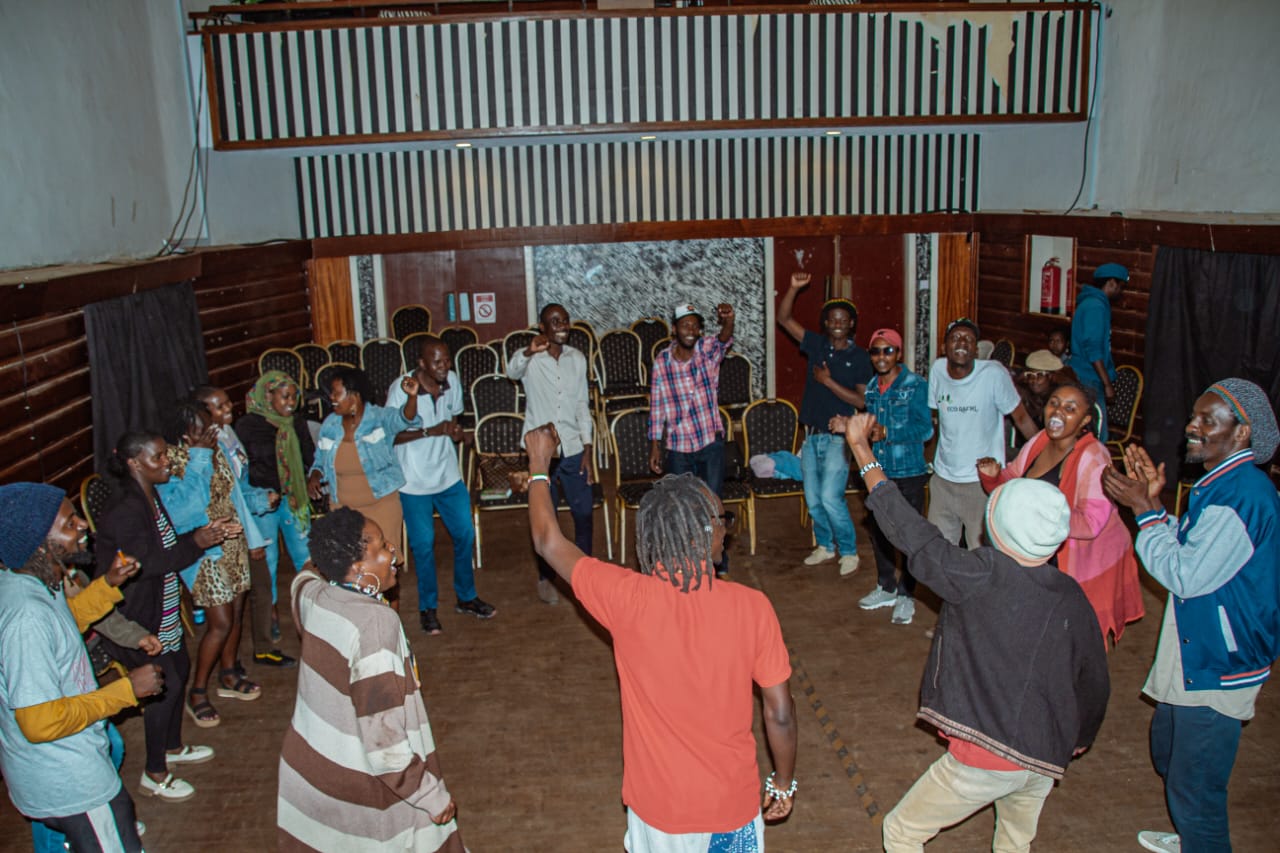
The session opened with Juogi, led by one of the members. Revolutionary songs accompanied rhythmic clapping, stomping, and swaying. This opening activated collective energy, established cohesion, and prepared participants physically and emotionally for the Afrikan Yoga practice that followed.
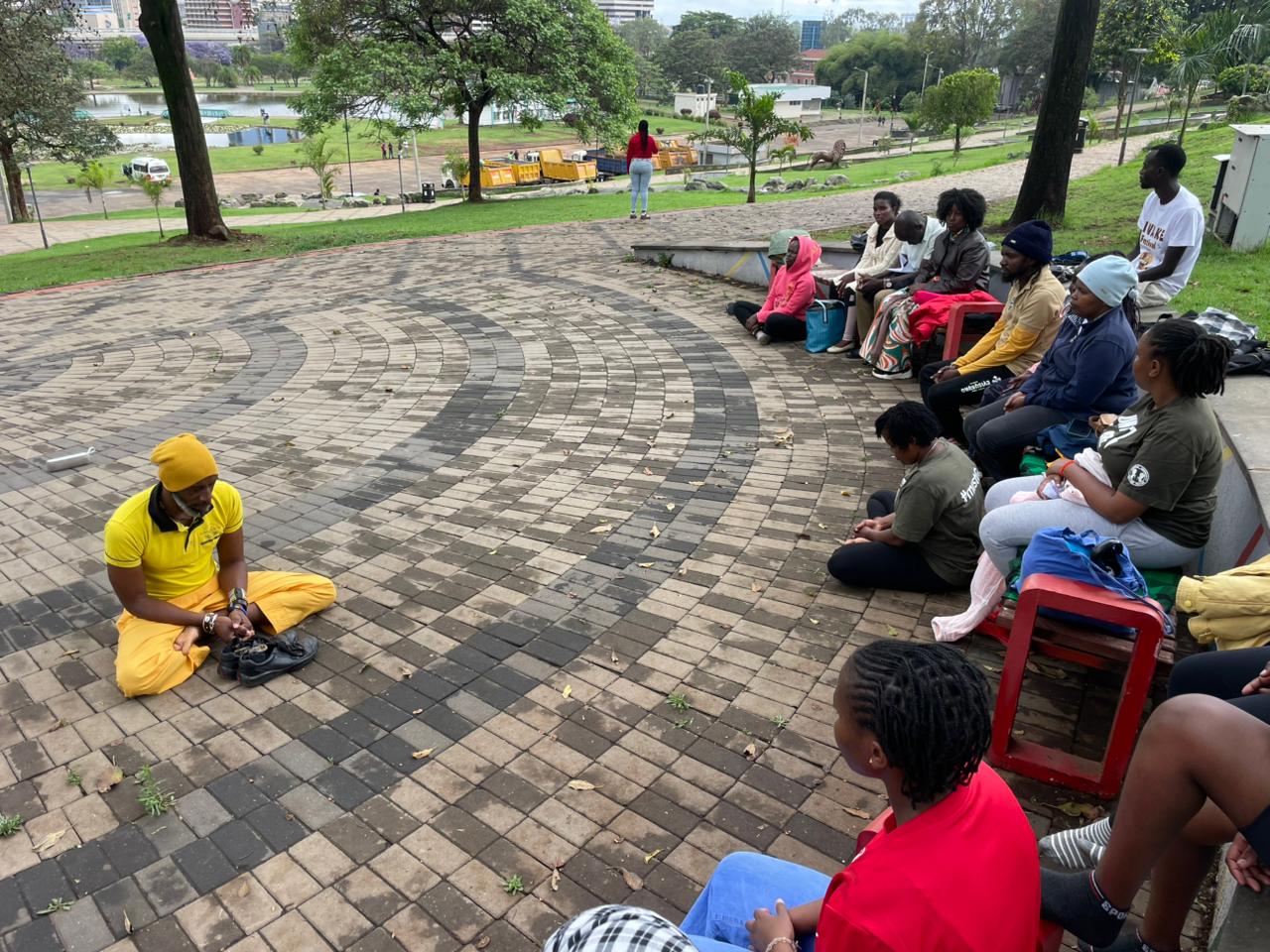
Silence and reflection: African Yoga Healing Session at Uhuru Park.
AFRIKAN YOGA SESSION
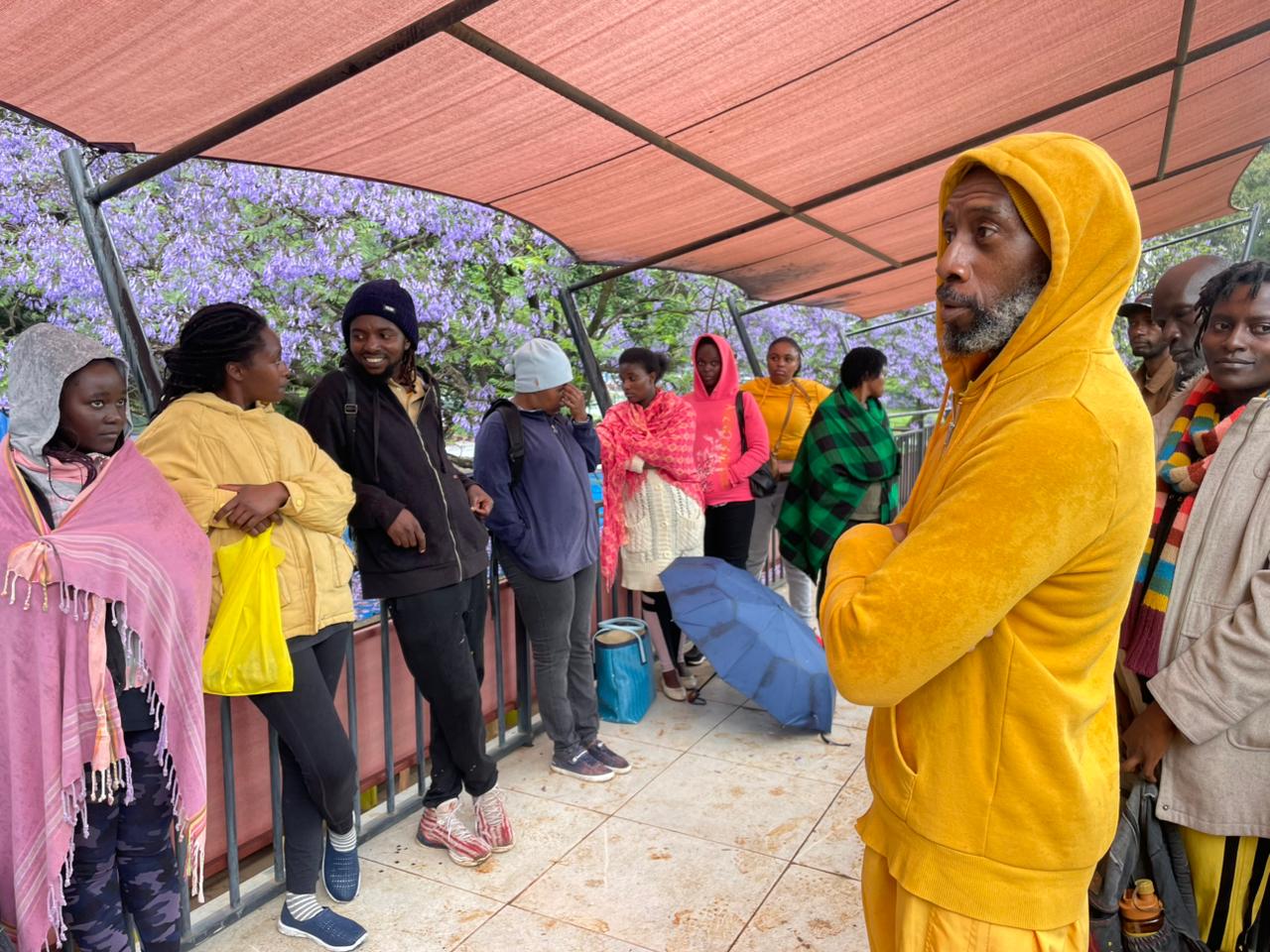
Some shelter from the rain: a reflective pause during the Afrikan Yoga Session.
The Afrikan Yoga session was facilitated by Pablo Imani and centered on grounded movement, breathwork, and a talk on the history of Afrikan Yoga. Participants moved through slow, intentional postures that emphasized balance, earth-connection, and the embodiment of the feminine principle. The practice was conducted without mats, reinforcing direct contact with the ground and the importance of grounding as both physical and emotional. Pauses between movements allowed for reflection and deepened bodily and spiritual awareness.
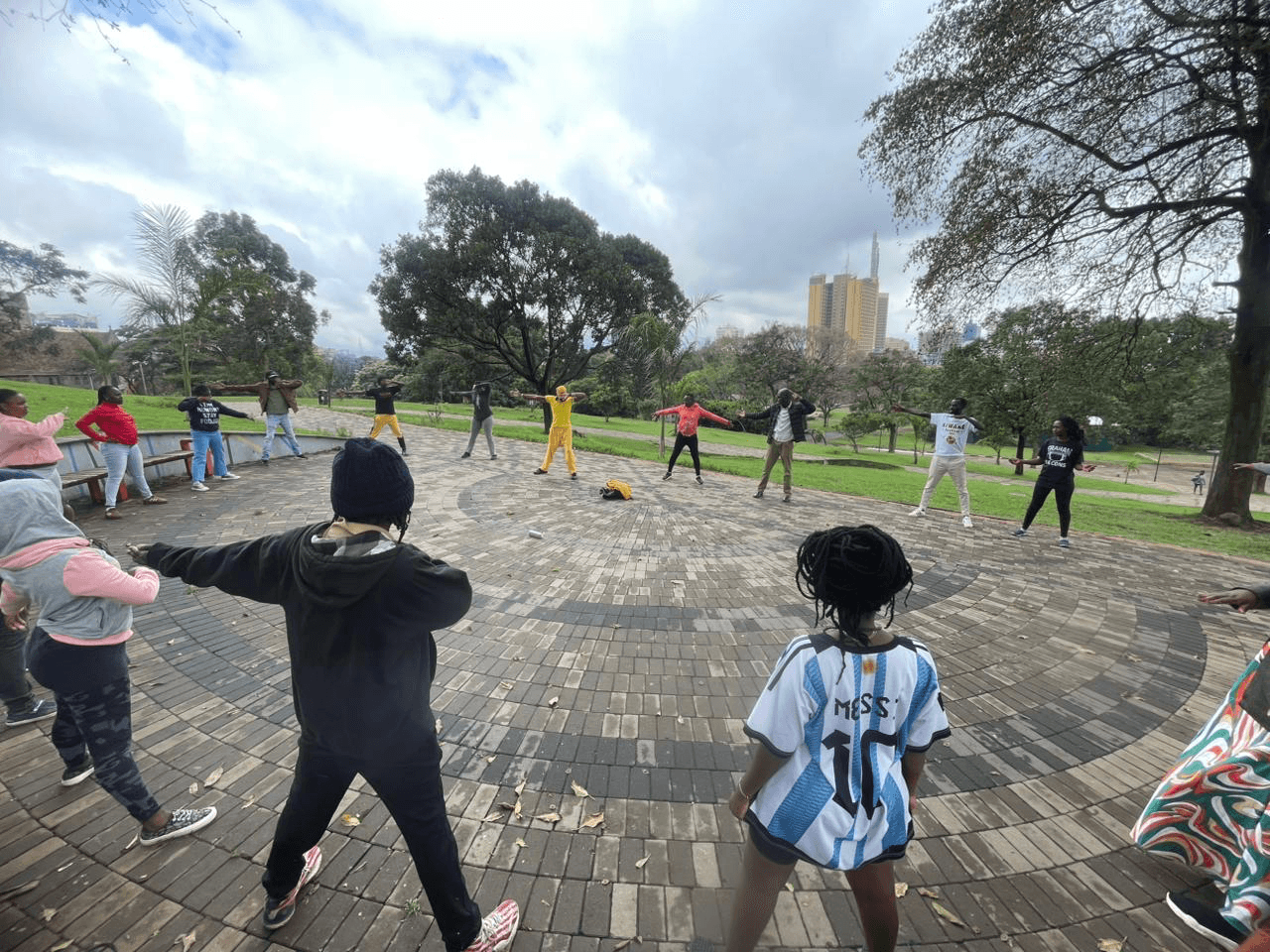
Following the Juogi and Afrikan Yoga sessions, participants shared reflections on how they felt. Emotions expressed included lightness, relief, calm, strength, happiness, tiredness, relaxation, freshness, and increased flexibility. The reflection circle created space for openness, empathy, and shared emotional honesty.
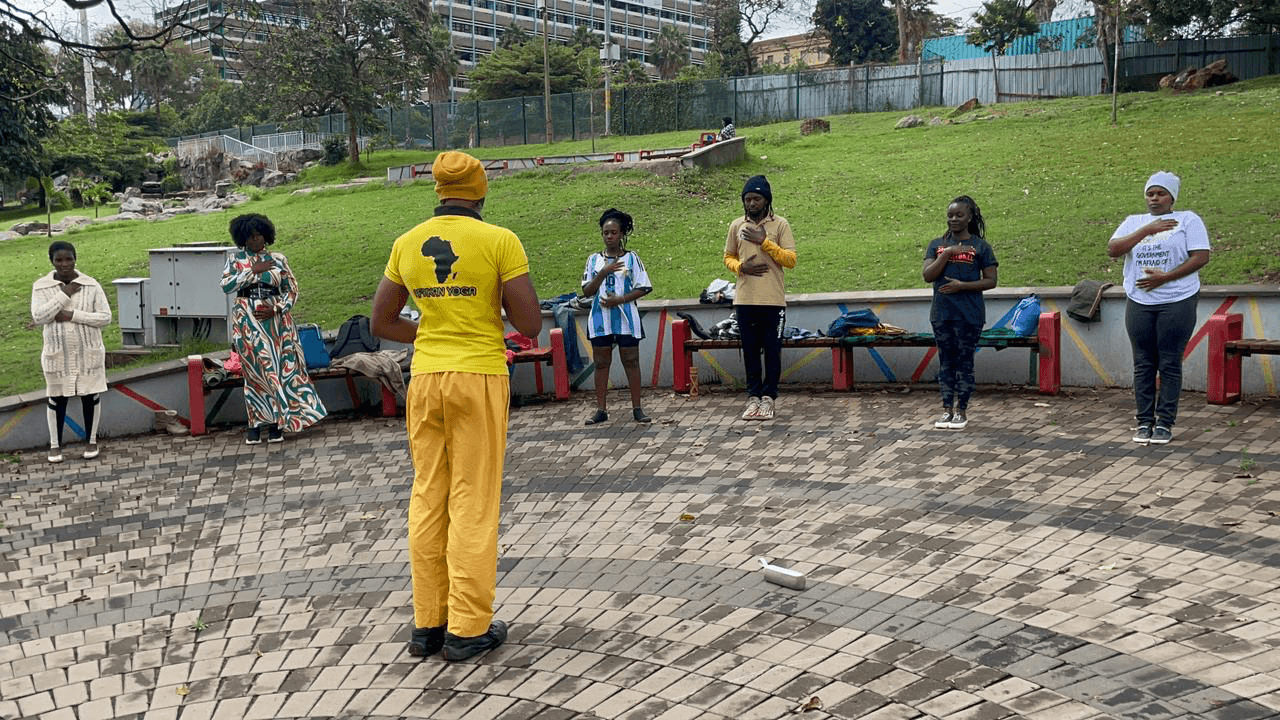
Deep Breathing Practice.
KEY IDEAS QUESTIONS AND TEACHINGS
We sat down for a Q&A session with Pablo, and several questions were raised:
3.1 SHOULD WE PRACTICE AFRIKAN YOGA WITH MATS?
Not using mats in our session was explained in terms of practicality and adaptability, allowing the practice to take place across varied environments without dependence on specialised equipment. It was also framed as a ritual decision, emphasising grounding and direct contact with the earth. Practising without mats further supported the embodiment of feminine principles and the cultivation of balance between masculine and feminine energies.
3.2 WHAT ARE THE BENEFITS OF AFRIKAN YOGA?
In discussing the benefits of Afrikan Yoga, the practice was described as one that cultivates rootedness and grounding in both cultural and personal histories. It encourages self-inquiry and emotional awareness, deepens understanding of one’s environment, and clarifies one’s relational place within it. Participants were invited to develop heightened sensitivity to natural elements, animals, and ancestral wisdom, as well as to attend to dream-based insights and intuitive forms of knowledge.
The benefits of nature-based healing were also explored. Nature was understood as facilitating a return to self, not as an external resource but as an extension of one’s own being. It was described as offering consistent and effective healing, while encouraging reconnection with core elements such as earth, air, and fire.
3.3 WHAT IS THE DIFFERENCE BETWEEN AFRIKAN YOGA AND INDIAN YOGA?
Distinctions were drawn between Indian yoga traditions and Afrikan Yoga. Afrikan Yoga (Smytawi) was emphasised as African in origin, with a focus on breath, balance, and relationship to nature. The practice challenges dominant assumptions about animals and natural symbolism and reinforces human relationships with the earth, animals, and other forms of life.
Several broader questions guided the discussion, including what makes Afrikan Yoga African, particularly in relation to its origins, breath practices, and cultural foundations. Participants also reflected on how individuals and communities might intentionally access wellness spaces without reliance on expensive or NGO-driven programs.
3.4 WHAT IS THE RELATIONSHIP BETWEEN THE BODY AND THE MIND IN AFRIKAN YOGA?
On the relationship between body and mind, participants were encouraged to trust the body more than the mind, with the body understood as rooted in soul and truth. Movement practiced with intention was described as a form of prayer. Self-inquiry was presented as central to understanding identity beyond social roles, clothing, and other external markers.
PABLO & THE AFRICAN YOGA JOURNEY.
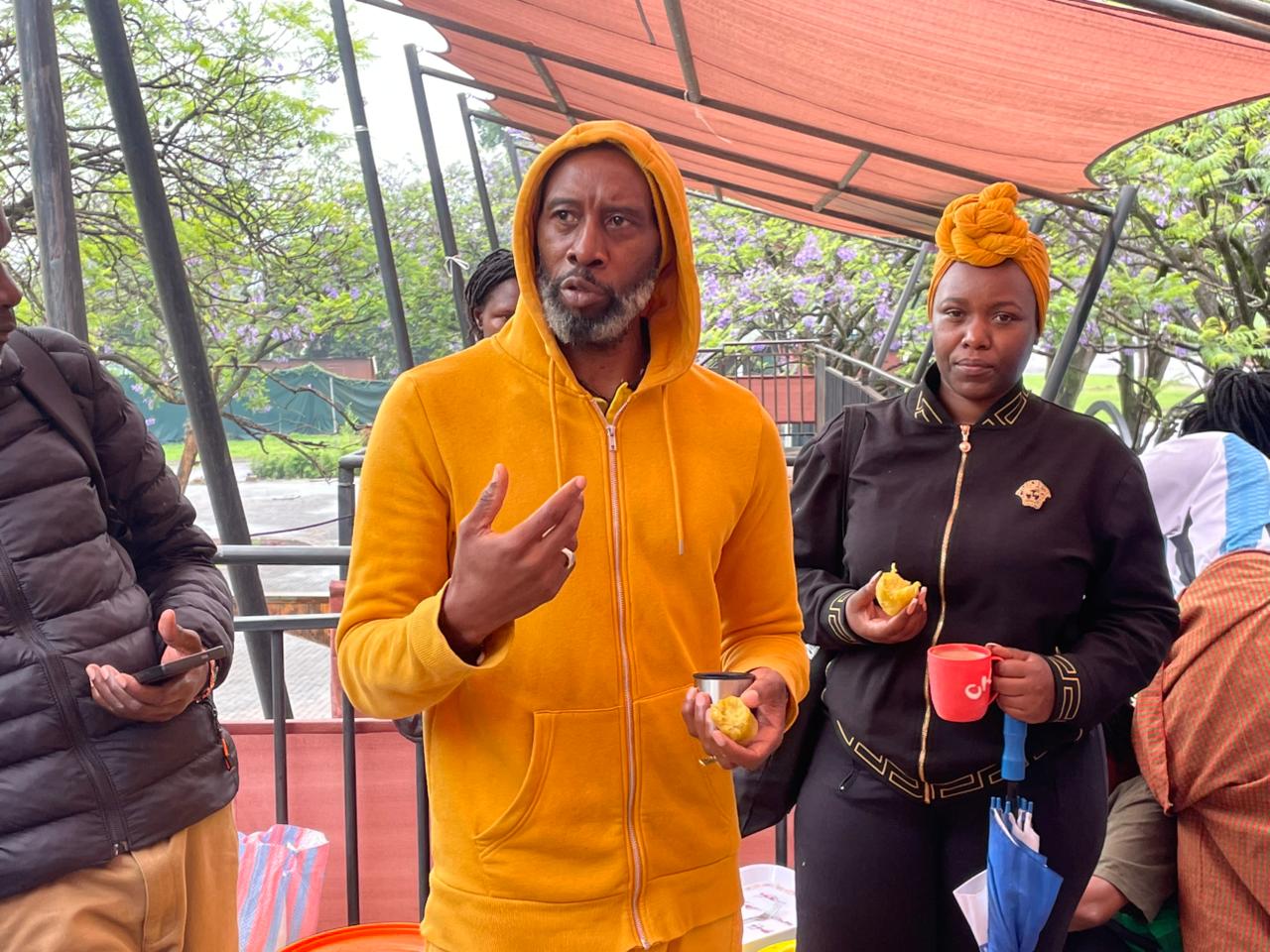
Pablo shared aspects of his personal journey that informed his approach to Afrikan Yoga and healing. He was introduced to herbal practices at the age of sixteen and began practicing yoga at nineteen. By the age of twenty-five, he had adopted a vegetarian diet, avoiding red meat and relying on herbal teas. His life experiences shaped his understanding of wellness as an embodied and experiential process. He also reflected on his time working as a gang coach, noting the absence of meaningful rites of passage for young people and the impact of this absence on their wellbeing.
Throughout the session, several statements offered insight into his philosophical orientation. He emphasized that movement practiced with intention is also a form of prayer. He framed ignorance as the real source of harm, positioning knowledge as righteousness. He reiterated his trust in the body over the mind and affirmed nature as a more effective healer than any external intervention.
Observationally, the tone of the session shifted over time. It began with an energetic and playful atmosphere during Juogi and gradually moved into a more contemplative and reverent mode during the philosophical discussions. Participants’ gestures included slow, intentional movements, nods, open palms, and moments of laughter during physically challenging postures. Emotional responses ranged from relief and calm to strength, tiredness, and happiness. Periods of silence created space for reflection, grounding, and internal processing.
FOOD AND CONVERSATION.
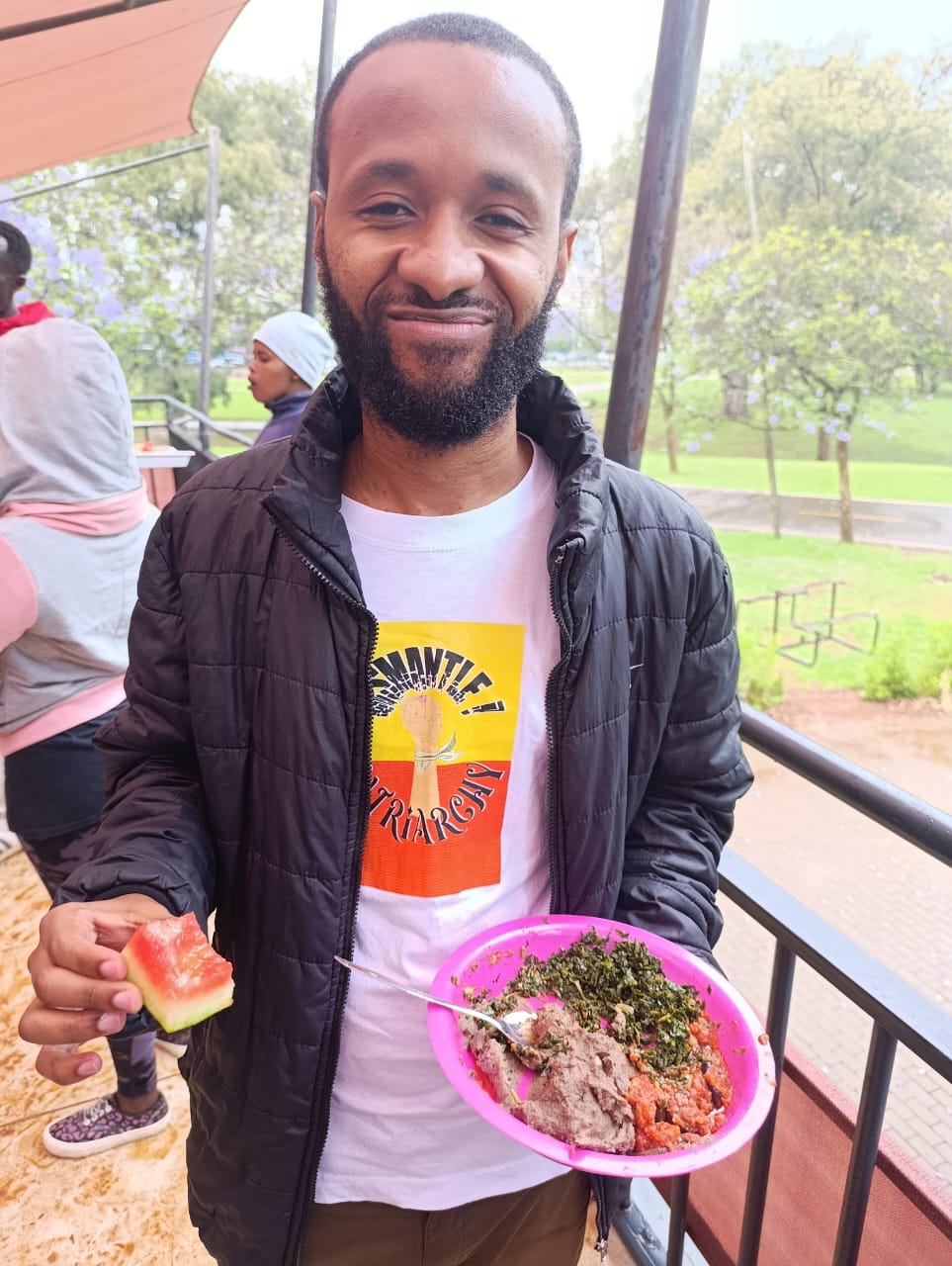
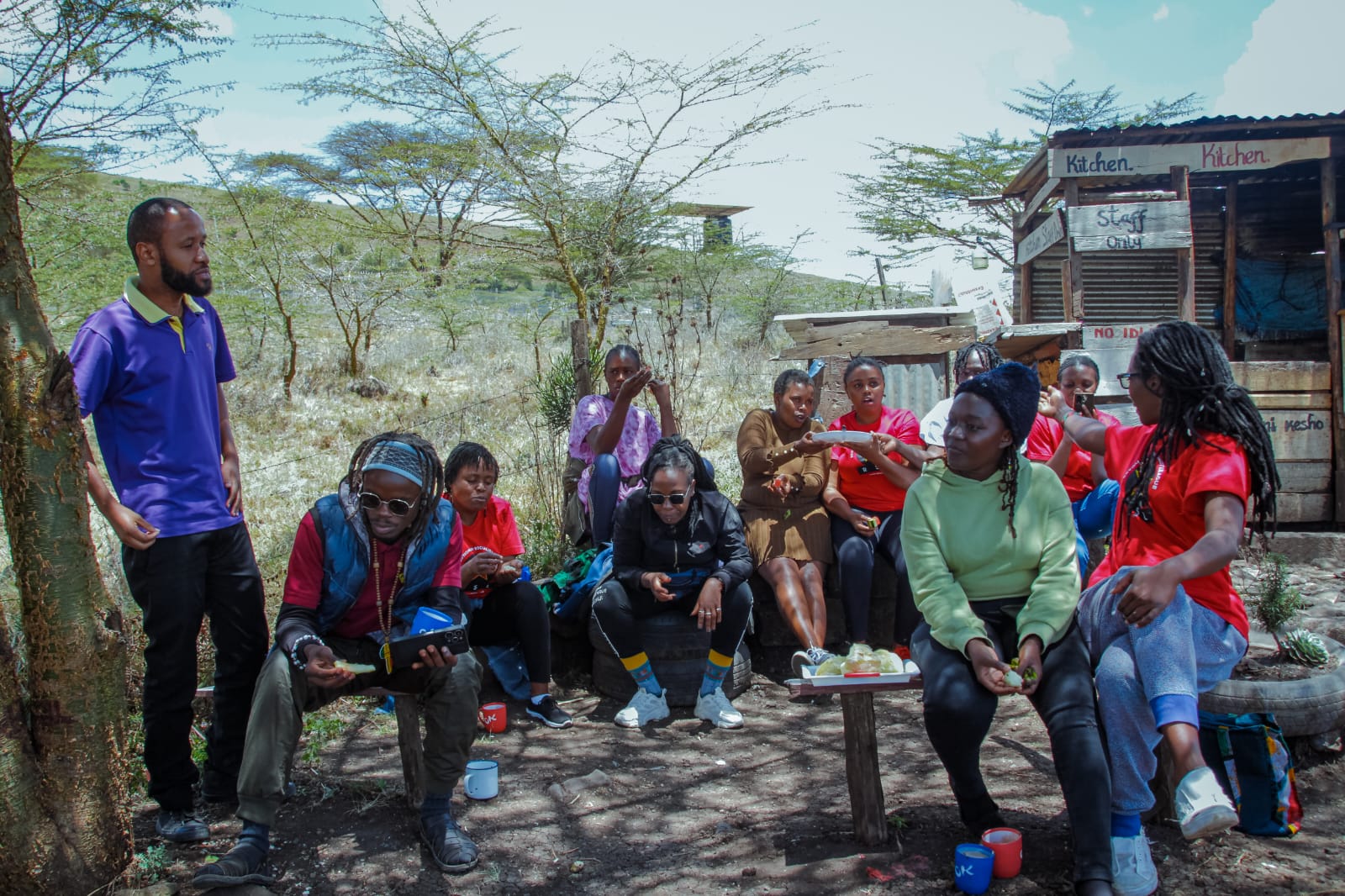
Comrade enjoying the alkaline meal.
Following the session, participants shared a meal prepared in line with collective agreements established during the previous gathering. The diet was alkaline and consistent with African healing praxis. The meal consisted of millet ugali, tomato and aubergine sauce, cilantro salad, fermented porridge, alkaline tea, and fruits. Informal conversations during the meal centred on names, family lineages, reflections from earlier sessions, and personal insights. Alongside these discussions, light-hearted exchanges emerged around movement challenges, bodily stiffness, and group dynamics.
Care and connection were expressed through both practical and relational gestures. Participants assisted one another with poses, offered shawls and physical comfort, shared food and drinks, and engaged in attentive listening. Acts of encouragement, affirming smiles, and subtle expressions of solidarity and emotional support contributed to a sense of collective holding.
The session unfolded within an open natural environment characterized by green lawns and gently swaying trees. Morning sunlight filtered through the branches, while birdsong blended with distant city sounds. A soft breeze and intermittent patches of shade offered comfort throughout the session. Rain fell intermittently, prompting participants to seek cover at intervals, an experience that intensified the session and deepened collective focus. The warmth of the herbal tea was especially welcome under these conditions.
IMPACT OF THE SESSION.
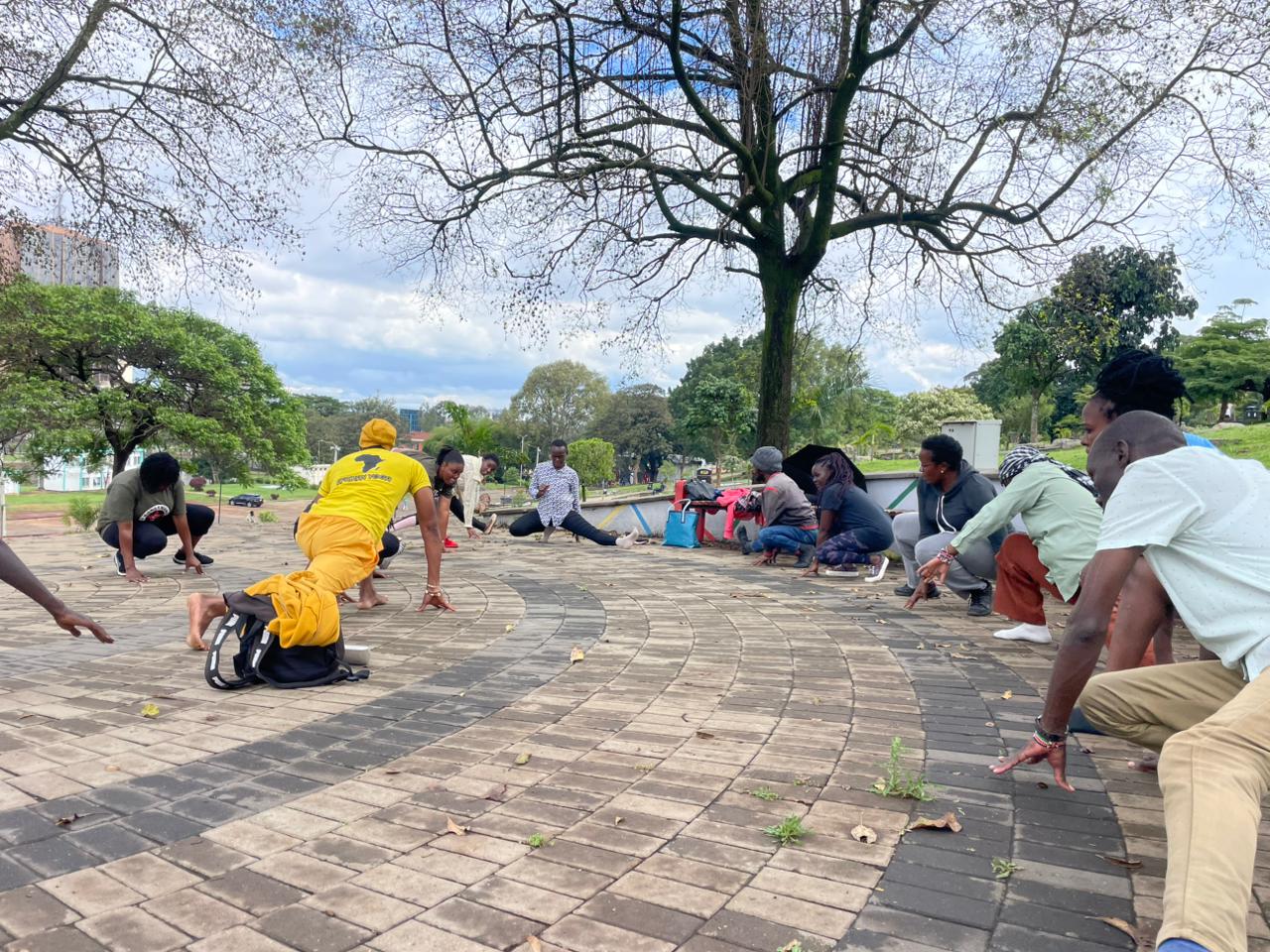
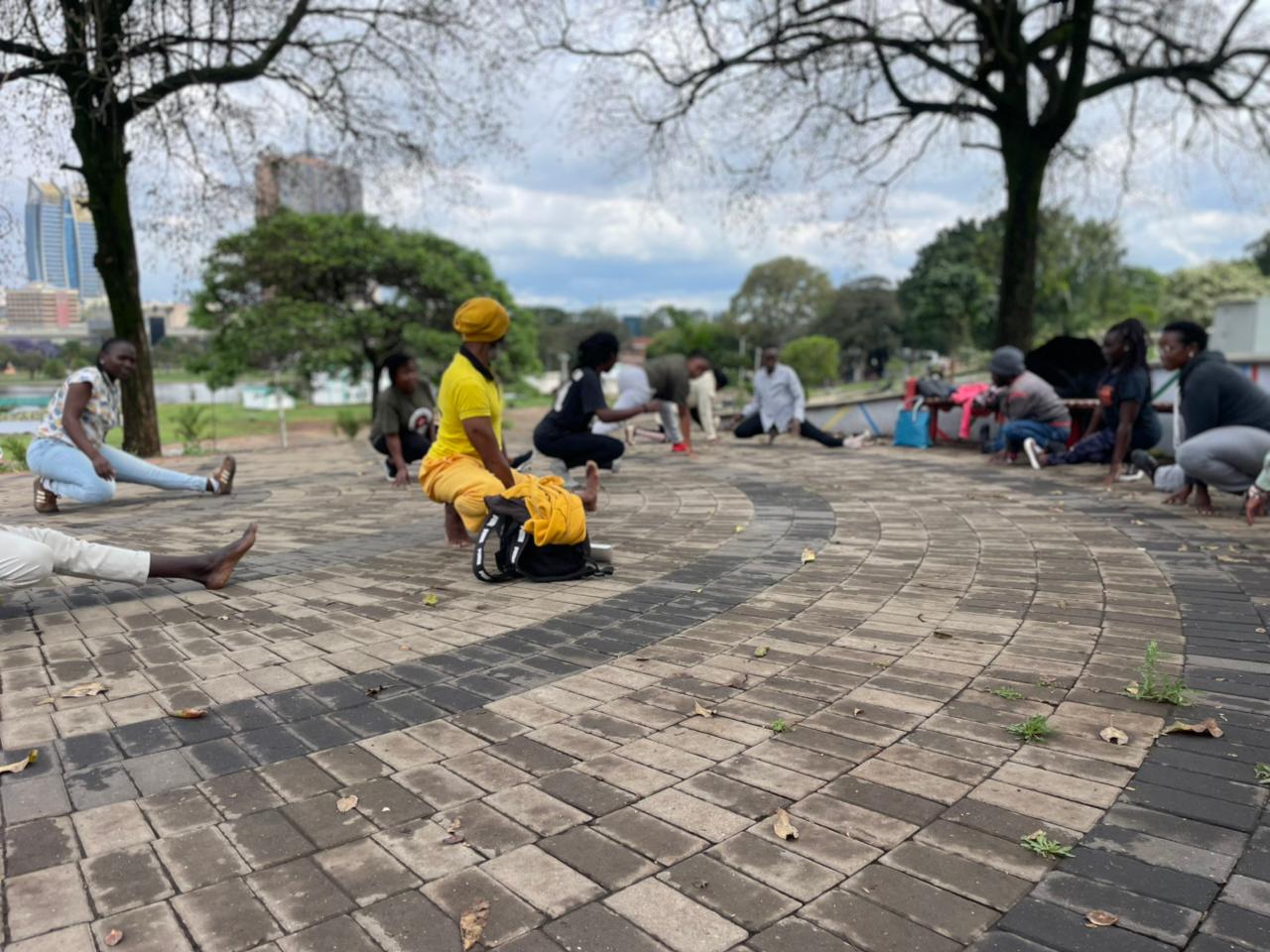
Deep stretches.
PRAXIS AND LEARNING OUTCOMES.
The open and grounded environment was integral to the session’s impact. Practising within a natural, public setting supported reflection, embodied movement, and emotional expression, reinforcing ACoHP’s emphasis on healing as a relational and contextual process rather than an individualized intervention. The simplicity of the space stood in deliberate contrast to commercialised wellness environments, affirming ACoHP’s commitment to non-extractive, accessible, and culturally grounded healing practices.
The session demonstrated the depth of Afrikan philosophy as articulated through the integration of movement, nature, and introspection. Participants’ emotional openness and vulnerability during collective reflections reflected the effectiveness of ACoHP’s emphasis on trust, shared process, and collective holding. Equally significant were the collective agreements that structured the gathering, which fostered discipline, accountability, and continuity, key principles within ACoHP’s approach to sustaining communities of healing practice over time.
Several reflective questions emerged that align with ACoHP’s broader inquiry into healing, consciousness, and political education. These included how dormant abilities may reveal themselves when the mind becomes quiet, how nature-based healing can be integrated into everyday life in sustainable ways, and how communities can reclaim wellness outside NGO-delivered frameworks. These questions remain intentionally open, serving as ongoing points of inquiry rather than conclusions.Participants’ embodied experiences further reflected ACoHP’s holistic framework. Many described feeling grounded, calm, and connected, alongside a sense of renewal, lightness, and inspiration. The session supported an integrated experience of physical, emotional, and spiritual dimensions, reinforcing ACoHP’s understanding of healing as an embodied, collective, and multidimensional process.
PROGRAMME OUTPUTS AND EMERGING RESOURCES
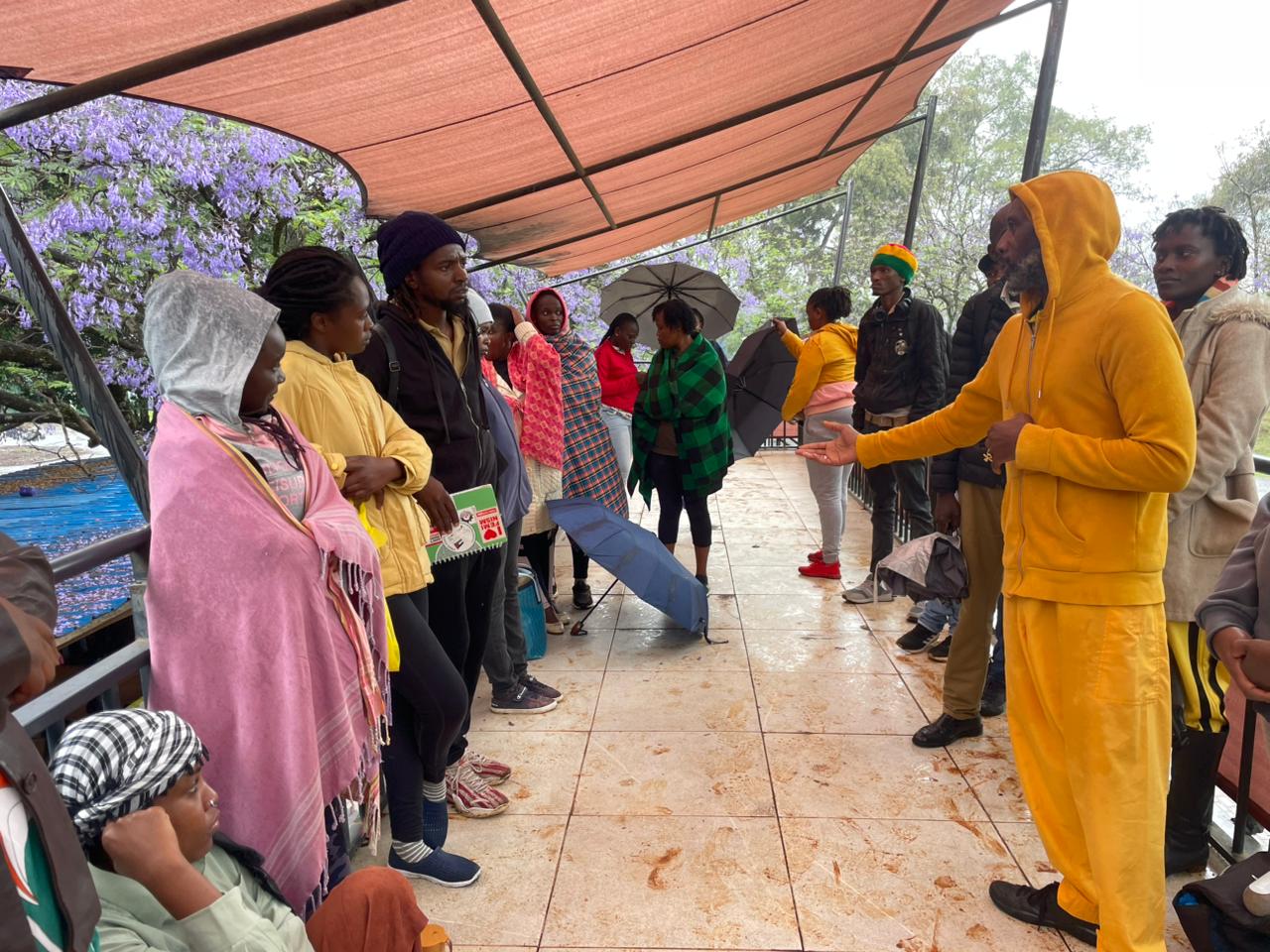
Pablo sharing reflections.
The session generated several tangible and intangible resources that will inform ongoing ACoHP programming. These included Juogi songs and rhythmic practices that can be integrated into future sessions as grounding and opening rituals. Philosophical insights and guiding questions emerged for both collective and personal inquiry, strengthening the programme’s reflective and pedagogical dimensions.
Participants also engaged in reflections on ancestry, naming, and cultural identity, contributing to ACoHP’s broader work on memory, lineage, and epistemic recovery. Curriculum-building notes and cohort agreements were developed, supporting programme continuity and the gradual formation of a shared methodological framework. Collectively, these outcomes contributed to a deepened understanding of Afrikan Yoga as both a cultural practice and a healing modality within the ACoHP framework.
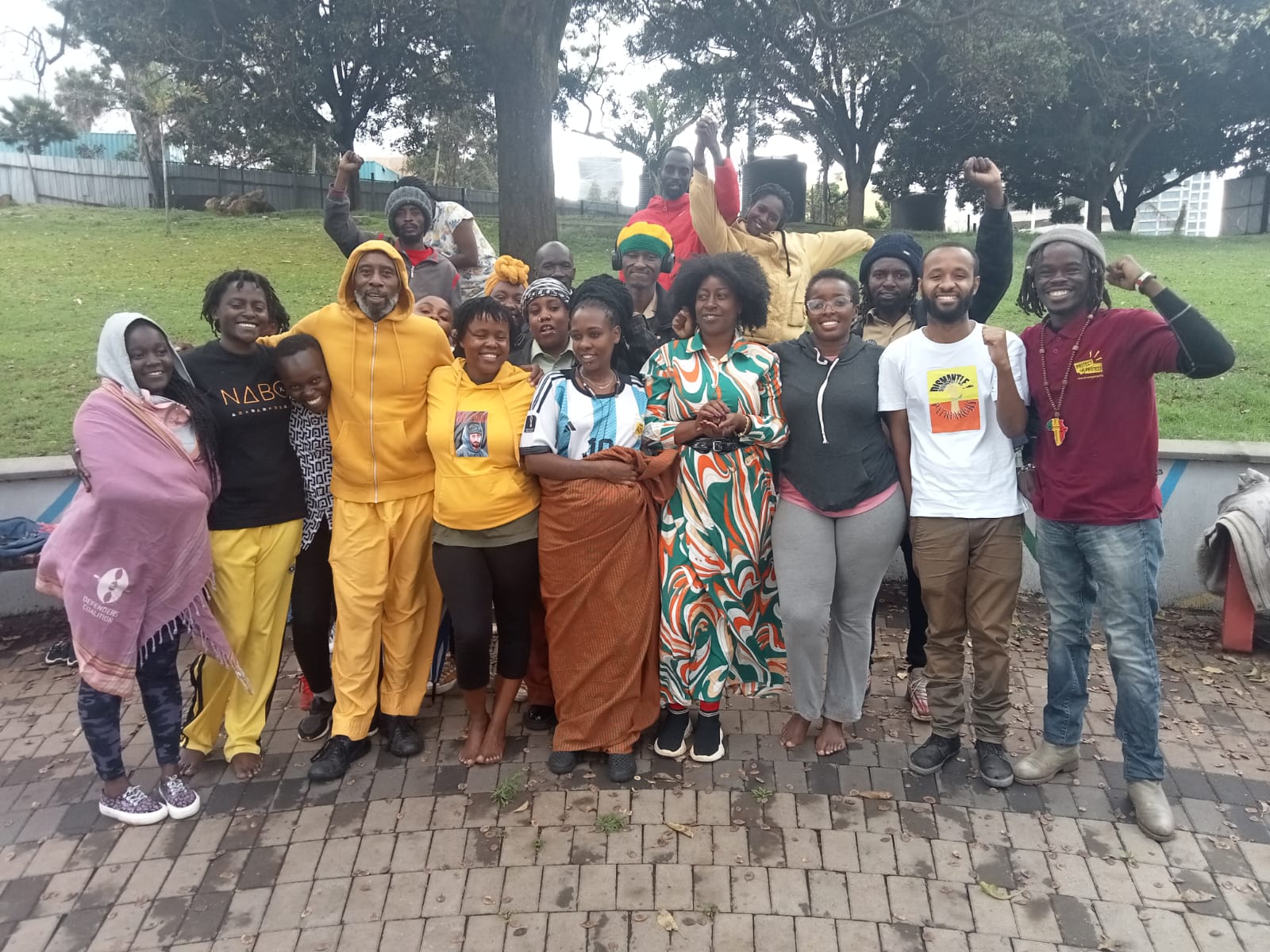
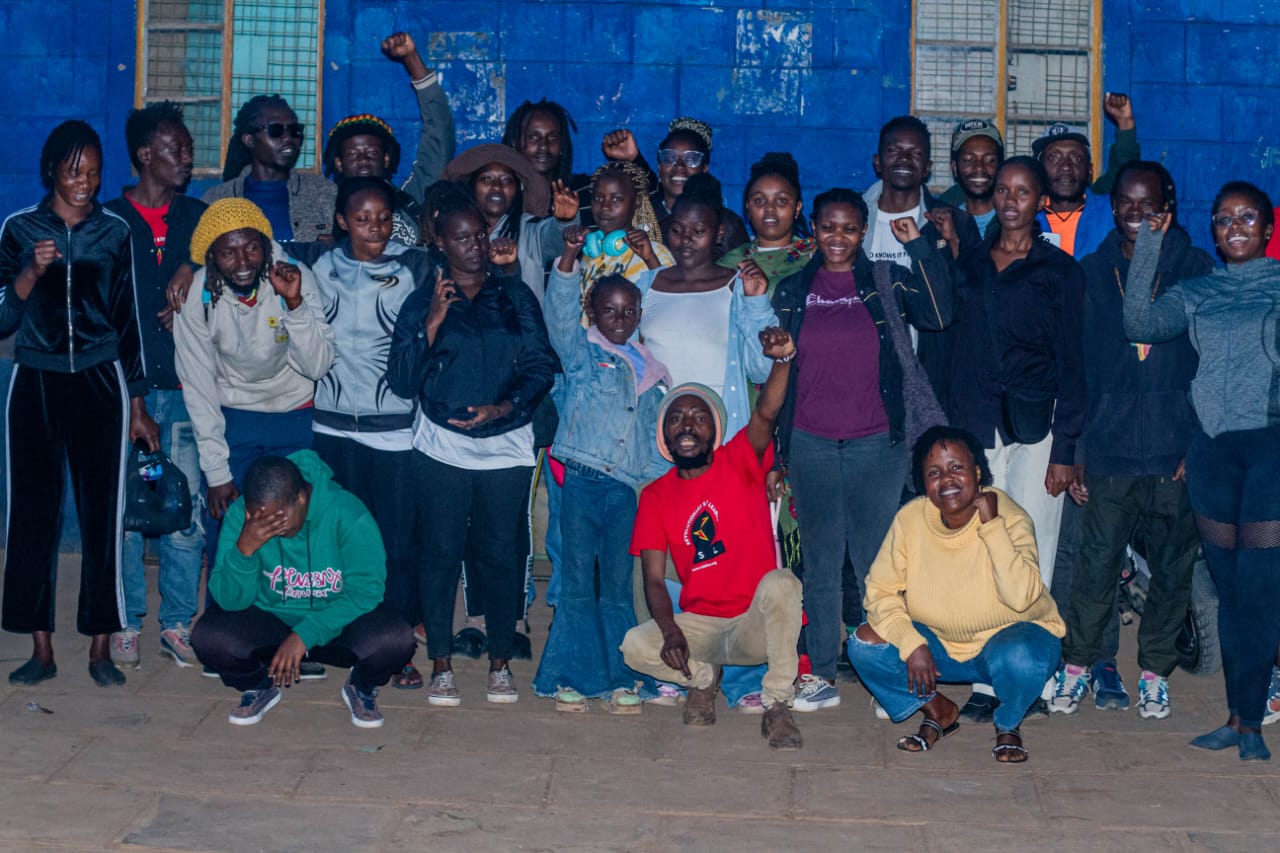
African Yoga ACOHP team, Nairobi 2025.
News, Voices & Impact
Explore updates, field notes, and stories that showcase our mission and impact.